
Olympia Chimney Flue Liner Replacement: The Philadelphia Owner’s Guide
Olympia Chimney flue liner replacement in Philadelphia typically runs $2,800-$5,400 installed, depending on height, diameter, and whether the chase needs rework. We stock Olympia Chimney-compatible stainless steel liners in 6″, 7″, and 8″ diameters on our trucks, and most replacements in Center City, Fishtown, and Germantown rowhomes are completed in a single day. If you’re seeing flakes in the firebox, smelling smoke in upstairs rooms, or your sweep flagged gaps in the clay liner during inspection, the flue liner is likely the culprit.
Most Philadelphia homeowners discover the problem two ways: a Level-2 camera inspection reveals cracked or spalled clay tile, or they notice water staining on the chimney breast after winter freeze-thaw cycles. In neighborhoods like Queen Village and Manayunk, where pre-war construction is common, the original clay liners were never built to handle modern, efficient appliance venting. The temperature swings accelerate deterioration. If it’s worth burning wood in, it’s worth knowing what’s above it.
Which Olympia Chimney Models This Applies To
Olympia Chimney manufactures UL-listed stainless steel flue liners in several grades: 316Ti alloy for wood-burning applications and AL29-4C for high-efficiency gas and oil appliances. The critical detail is matching the alloy to your fuel type. A 316Ti liner installed on a condensing gas furnace will corrode within seasons. We see this mismatch in Mount Airy and East Falls homes where a previous owner or handyman swapped the appliance without updating the liner spec.
Identification starts at the cleanout or chimney top. Olympia Chimney stamps the liner collar with the diameter, alloy grade, and manufacturing date. If the collar is missing or corroded, we measure the flue interior and check the appliance venting requirements against the manufacturer’s spec sheet. For Philadelphia’s tighter flue dimensions, common in twins and quads in Roxborough and Tacony, we often spec Olympia Chimney’s oval-to-round adapters rather than forcing a round liner into an inadequate space.
We are an independent service provider with no affiliation to Olympia Chimney. For most replacements, we install OEM Olympia Chimney liner sections with their proprietary compression-fit couplings. In certain chase configurations, we may recommend a DuraFlex or Gelco equivalent that meets the same UL 1777 standard, particularly when the existing termination hardware is already compatible. Carl Bridwell makes the call on each job after seeing the actual conditions.
Signs Your Olympia Chimney Flue Liner Replacement Is Failing
- Clay flakes or sand in the firebox. The original terracotta liner is spalling, shedding material as it deteriorates from thermal cycling. In Philadelphia’s hard-water zones, mineral migration accelerates this, and the debris you see is the liner literally crumbling.
- Smoke odor in upstairs bedrooms or attic. Gaps between clay tiles or corrosion holes in a metal liner allow combustion gases to leak into the chimney cavity. Older homes in Germantown and West Oak Lane often have balloon framing that lets those gases travel horizontally through wall cavities.
- White efflorescence or rust streaks on exterior brick. Moisture is getting past the liner and condensing in the chimney structure. This is especially common after Philadelphia’s freeze-thaw cycles, where trapped water expands and cracks the masonry from within.
- Water stains on the ceiling near the chimney breast. A compromised liner no longer channels exhaust gases efficiently; cooler flue temperatures cause more condensation, and that moisture finds its way through any breach in the crown or flashing.
- Your sweep’s camera shows gaps, offset tiles, or orange rust bloom. The Level-2 inspection is definitive. Rust bloom on a stainless liner indicates improper alloy selection or a liner that has exceeded its service life, often 15-25 years in Pennsylvania’s acid-rain exposure.
Replacement Cost & What’s Included
Pricing breaks down into three components: liner material, labor for removal and installation, and any chase or crown repair required to pass inspection. For a typical Philadelphia two-story rowhome with straight vertical flue access, expect $2,800-$3,800. Homes with offset flues, attic transitions, or requiring scaffold setup in Center City’s tighter lots run $4,200-$5,400.
| Component | Typical Range |
|---|---|
| Olympia Chimney 316Ti liner (6″-8″, 20-25 ft) | $1,100-$1,800 |
| Labor: removal, installation, insulation wrap | $1,200-$2,200 |
| Crown repair or chase top replacement | $400-$1,200 |
| Level-2 inspection with photo documentation | $250-$350 |
Every replacement includes the liner, proper insulation per NFPA 211, a new termination cap, and our 90-Day Done Right Promise in writing. The number on the estimate is the number on the invoice. No surprises, no arguing.
DIY or Call Us?
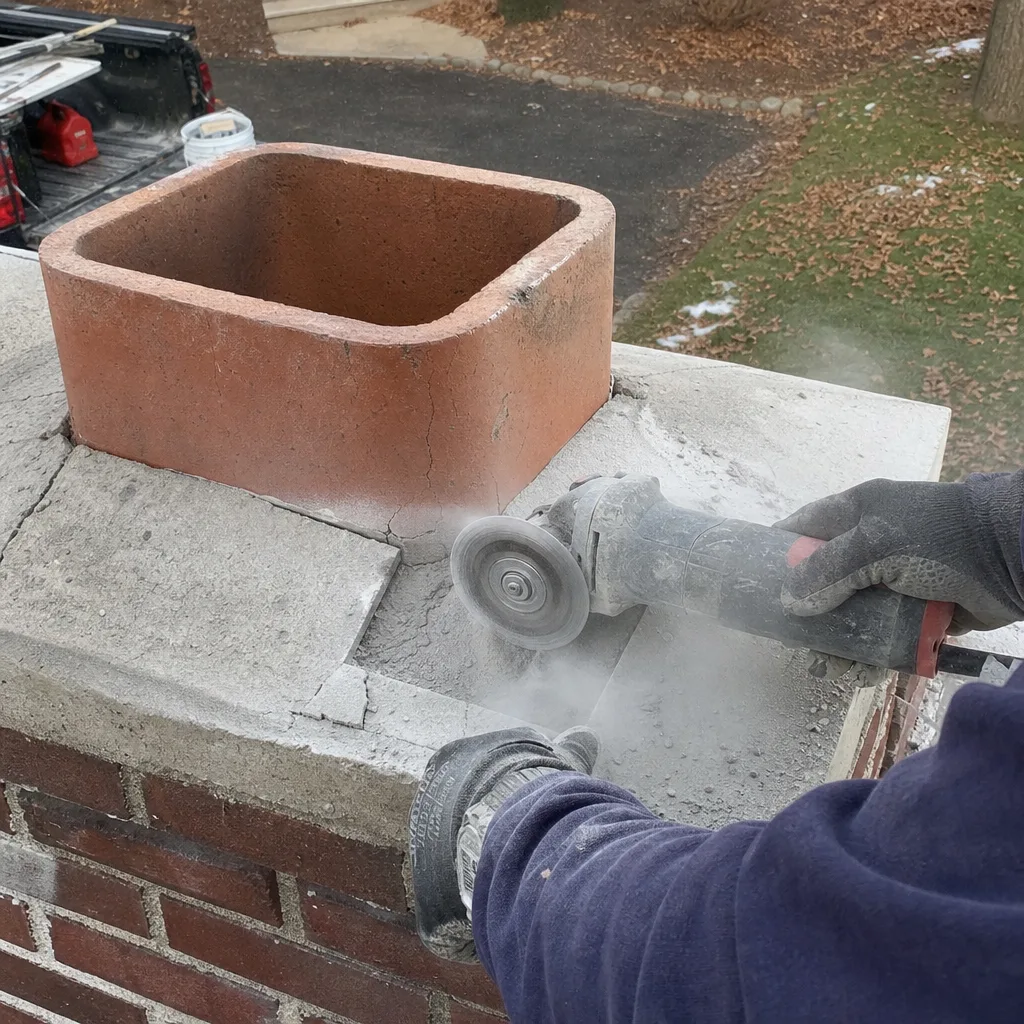
There’s a short list of what a homeowner can safely check: verify the cleanout door opens and closes, confirm the damper operates, and look for obvious debris or animal nesting at the cap. Beyond that, flue liner replacement involves working at height on a pitched roof, handling sharp stainless steel sections in tight chimney chases, and properly insulating the liner to prevent creosote buildup or condensation damage.
The real risk isn’t the labor, it’s the unseen: an improperly sized liner creates drafting problems that spill carbon monoxide into living spaces. An uninsulated liner in a Philadelphia exterior chimney cools too fast, accelerating creosote accumulation. We’ve been called to correct DIY installations in Port Richmond and Overbrook where the liner was sound but the termination was wrong, or the insulation was omitted entirely. The fix cost more than doing it right the first time.
We carry Olympia Chimney, DuraFlex, HeatShield, and Gelco liners on our trucks. Most jobs finish in one visit. Call (866) 580-4069 for a free estimate and we’ll show you exactly what we found, with photos you can see and a plain-English verdict.
FAQs
A properly installed 316Ti stainless liner typically lasts 20-25 years in Philadelphia’s climate, though acid rain exposure and frequent burning can shorten that to 15 years. AL29-4C liners for gas appliances often exceed 25 years. Annual inspection catches deterioration before it becomes hazardous. Call (866) 580-4069 to schedule yours.
Small cracks in clay tile can sometimes be addressed with HeatShield cerfractory foam resurfacing, but only if the damage is superficial and limited to accessible sections. Once tiles are spalling, offset, or the liner is metal with pinhole corrosion, replacement is the only code-compliant solution. We document both options when repair is viable. Call (866) 580-4069 for an honest assessment.
Most Olympia Chimney flue liner replacements in Philadelphia take four to six hours from setup to final inspection. Straight vertical flues in standard rowhomes are fastest. Jobs requiring scaffold, attic transitions, or crown rebuild may extend to a full day. We complete most jobs in a single visit. Call (866) 580-4069 to check same-day availability.
We stock 6″, 7″, and 8″ Olympia Chimney-compatible liners in both 316Ti and AL29-4C alloys on our trucks, along with DuraFlex, HeatShield, and Gelco equivalents for same-day installation. Specialty sizes or chase modifications may require a next-day order, but we rarely encounter a Philadelphia flue we can’t match from stock. Call (866) 580-4069 to confirm fitment for your model.
Written by Carl Bridwell, Owner & Master Sweep, Hearthstone Chimney Co. of Philadelphia at Hearthstone Chimney Co. of Philadelphia, serving Philadelphia and nearby areas.